|
Over the past few years, I’ve deliberately stepped back from social media engagement and have nearly eliminated my habit of scrolling through news and current-events feeds. That decision has been one of the best things I’ve done for my mental, emotional, and
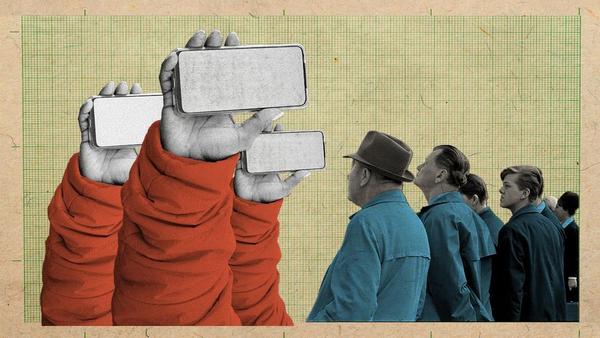
spiritual health. I highly recommend it — and will say more about it later. At the same time, the reality is that none of us can live today without some level of exposure. The news finds us whether we go looking for it or not. This leaves me in a place of deep concern — more than at any other time in my 61-year-old life. My concern is not what Democrats or Republicans are doing. To be clear: this is not a partisan political rant. What troubles me is the environment we’re all swimming in: the information economy, the media ecosystem, and the social-media machinery that shapes our attention and emotions. These forces are damaging people, much more than most of us realize. They are fracturing our ability to have meaningful conversations, to tolerate disagreement, and to sustain anything resembling functional community — let alone a functional democracy. Some days it feels like we are passengers on the Titanic, cruising along toward an iceberg while the music keeps playing. I keep wanting to shout, to warn, to help people notice what is happening around us and inside us. The excerpt I’m about to share
comes from an email recently sent by Vishen Lakhiani — an entrepreneur born in Malaysia, raised in India, who has spent many years living in the United States and now travels the world as the CEO of an American company. His professional life puts him in regular contact with tech and media leaders, especially in the coastal cities. Last year he took his family on a long road trip through the western and midwestern states, and found himself face-to-face with everyday Americans whose lives looked very different from his assumptions. Lakhiani's personal story isn’t the point here, although I'm
including it to give you a sense of context. What matters is what his experience opened his eyes to — what he sees happening in the information systems that surround us, and how those systems are shaping our fears, our divisions, and our perception of one another. First off, here's the background -- his story -- which paves the way for his insights into how our media eco-system is failing us:
I need to confess something.
For years, I consumed media that painted a certain picture of Trump supporters. I read the tweets. I watched the clips. I saw the worst moments replayed on loop until they seemed like the whole story. I absorbed a caricature. Then I went to Wyoming. And I met human
beings. They didn't match the cartoon I'd been sold. Not even close. These were people worried about the same things everyone worries about: - Can I afford to get sick?
- Will my children have a
better life than me?
- Why does it feel like the whole system is rigged against regular folks?
These aren't Republican questions or Democratic questions. These are human questions. These are
kitchen-table questions. I realised I had allowed myself to see my fellow human beings as enemies — because it's easier to hate a cartoon than to sit with complexity. And if I've been manipulated, I suspect I'm not the only one.
So that's the background. Then Lakhian continues with reflections on what's happening around us. GIven his connections -- and
friendships -- with tech and media leaders, it's surprising how pointed he is about his concerns. I believe everyone needs to hear what he has to say:
The Machine That Profits From Your Division
Here's what I've come to believe: There are forces that profit when Americans hate each
other. The equation is simple: When you're angry, you click. When you click, someone makes money. When you're afraid, you watch. When you watch, someone sells ads. And when you are divided, you don't notice that your wages haven't kept pace with inflation while CEO pay has soared. You don't notice that healthcare bankrupts over half a million families every year. You don't notice that the same corporations often fund both parties, ensuring they win no matter who is in the White House. The platform owners know exactly what they’re doing. A study from MIT found that falsehoods and outrage-driven content spread six times faster than the truth! Internal Facebook files leaked in 2021 revealed that their algorithm privileged anger to such a degree that even Meta’s own engineers warned it was “ripping society apart.” Ken Wilber calls this the "Culture of Post-Truth." It creates a state of "aperspectival madness"—where we lose
our shared reality and retreat into warring tribes. When algorithms prioritize outrage over facts, truth vanishes. And when there is no truth, there is only power. The division is not an accident. It is a business model. And all of us — left and right, rural and urban, MAGA and progressive — we are the product being sold.
Then comes the
second wave: The Bots.
A 2024 USC study analyzed the online traffic during recent political flashpoints. What they found was chilling. Nearly half of the most viral,
toxic conversations weren't coming from humans. They were generated by bots. In some cases, bot activity spiked from 20% to 43% of the total conversation. These weren't Americans. These were automated scripts originating from Russia, Nigeria, Bangladesh, Pakistan, and Macedonia. Think
about that. When you see a comment that makes your blood boil, when you rage at "the other side" — half the time, you aren't even fighting a fellow citizen. You are fighting a line of code from a server farm halfway across the world. It is a foreign algorithm wearing the mask of your neighbour. And the bots are designed to make you hate each
other.
The Real Enemies Are Not Each Other
If I could share one insight from an outsider looking in with love, it would be this:
The veteran in Wyoming and the activist in Oakland are not enemies. They are prisoners in the same cell, fighting over crumbs while the warden laughs. Your
frustration is real. But the target you've been given is wrong. And while you are fighting your neighbour, the systems that squeeze you keep squeezing.
What I'm Asking
I'm not asking you to change your vote. I'm not asking you to abandon your values. I'm not asking you to agree with me. I'm asking something simpler: Be suspicious of anyone who tells you to hate. Be suspicious of the media that makes you angry every single day — because anger is
profitable, and you are the product. Be suspicious of leaders who need enemies more than they need solutions.
WHAT CAN WE DO?
(Now it's me -- Mark -- again.) If you’re anything like me, seeing all of this laid out creates a tension. On one hand, it’s helpful to identify what’s happening around us. On the other hand, most of it feels outside of our control. And when we feel powerless, the temptation is either resignation or outrage — neither of which helps us. One of the principles I come back to again and again,
both as a pastor and a recovery coach, is this: Worrying about what you can't control does not make you safer or wiser. It only makes you anxious. Jesus calls us to something different: a life where we do what we can and entrust the rest to
God. That said, not everything happening right now is outside our control. There are small, practical steps we can take — and they matter. 1. Pray regularly for our country, for unity, and for truth.
Although it might sound like it at first, but this is not a cliché spiritual answer. Scripture repeatedly commands us to pray for “kings and all those in authority” so that “we may live peaceful and quiet lives” (1 Tim. 2:1–2). Pray for discernment. Pray for wisdom. Pray
that truth would cut through the fog and that love would rise above fear and hatred. 2. Always remember: you are being targeted.
I don't mean that in a paranoid way, but in a very literal, algorithmic way. Tech companies,
media platforms, and political influencers have mountains of data about your habits, preferences, fears, and triggers. And remember this: Their incentives do NOT align with your well-being. Your sense of peace and well-being does not make them money. Outrage does. Calm does not keep you clicking. Anxiety does. The point here is not to
villainize individuals. These are not evil people. Rather the point is to recognize the dysfuntion of the system we’re swimming in. And once you see the system clearly, you can stop being naïve about how it shapes your thoughts and emotions. 3. Do NOT engage
online about social or political issues.
Engagement — even to “correct” something — strengthens the algorithms that are tearing our culture apart. Every comment, click, share, or reaction tells the system, “Show me -- and others -- more of this.” The less you participate in these cycles, the less power they have over you, and the less viral these messages of hatred and fear become. 4. If you must speak online as a Christian, act like one.
The world does not need more clever takedowns or heated arguments. It needs people who are “quick to listen, slow to speak, and slow to become angry” (James 1:19). If your online presence doesn’t reflect the character
of Jesus, it is not Christian witness — it’s noise. You're not convincing or helping anyone. You're just making things worse. 5. Unsubscribe from partisan media.
This is the part that tends to make people upset, but I
believe it strongly: If you know a "news" media source is deliberately biased, stop being a consumer of it. This includes Fox News, CNN, and MSNBC, among others. When media stops even pretending to be unbiased, it distorts your sense of reality by only showing you part of the picture, deliberately hiding anything that is "inconvenient" for their agenda. At this point, it's no longer news -- it's propaganda. As a reader or listener, you think you are being informed ... but instead you are being manipulated. Stop watching. Stop reading. Unsubscribe. No longer subject
yourself to propoganda. Instead, look for other outlets that still seek to provide fair reporting. But don't even trust that. Use multiple sources. Seek perspectives that challenge your assumptions. Wisdom grows in humility, not in echo chambers. 6. Take a
social-media and/or news fast.
Try it for the month of December — let's call it “Disengage December.” Put down your phone. Step away from the computer. Engage in a hobby, watch a movie, or get together with friends instead. As I said at the
beginning of this article, I've taken this step, and heartily recommend it to anyone, and everyone. And I'm not alone. There's been a surge of articles recently about people abandoning social media, and how traffic on the various platforms is increasingly AI generated (as Lakhian pointed out above). Just to mention one example of reporting on this growing trend, the title of a recent article on the tech site CNET says it all: "AI Slop Has Turned Social Media Into an Antisocial Wasteland." If your job requires you to stay partially connected, set strict limits and avoid anything not essential. Communicate through email, text, phone calls, and — imagine this — face-to-face conversations. You may be surprised at how quickly you start to regain your mental and spiritual equilibrium. A Final Word We can’t fix the whole system. But we can choose how we live inside it. We can choose prayer over panic, wisdom over reactivity, and connection over division. The world is full of forces trying to pull us apart. But God
has entrusted us with practices that can make us whole: truth, love, prayer, community, and the courage to step out of the current when the current is destroying us. We can’t control everything — but we can take responsibility for our attention, our hearts, and our witness. And that is no small thing. NEXT ACTIONChoose one concrete step to take this week: - Turn off one partisan news source.
- Delete one social media app from your phone.
- Commit to praying for unity each day at a specific time.
- Mark your calendar for “Disengage December” and begin planning what
that will look like for you.
Pick something. Write it down. Then ask God to help you follow through. Small choices, repeated steadily, change the trajectory of a life — and sometimes even the climate of a community.
|